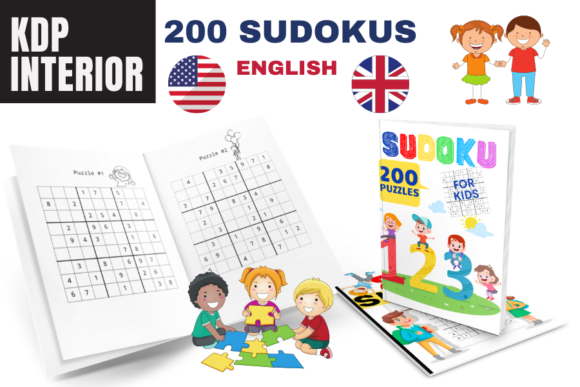
200 Sudokus for Kids English Version: A Strategic Tool for Learning and Development
At first glance, 200 Sudokus for Kids English Version may appear to be a simple puzzle book. However, when examined through a strategic lens, it reveals itself as a versatile resource with applications far beyond casual entertainment. Designed for children, this collection of 200 puzzles offers structured cognitive challenges that can be leveraged by educators, parents, and even professionals seeking to enhance focus, planning, and problem-solving skills in young minds.
Why 200 Sudokus for Kids English Version Matters
The core value of 200 Sudokus for Kids English Version lies in its ability to cultivate logical thinking and pattern recognition. These are foundational skills not only in mathematics and science but also in decision-making and strategic planning. Each puzzle requires careful analysis, patience, and the ability to backtrack when assumptions fail. These traits are directly transferable to real-world scenarios such as project planning, resource allocation, and process optimization.
For educators and parents, the book serves as a low-cost, high-impact tool to engage children in meaningful mental exercise. Its English-language formatting ensures accessibility for non-native speakers, making it a valuable resource in multilingual classrooms or homes.
Strategic Applications Beyond the Puzzle Grid
While the primary audience is children, the strategic utility of this puzzle book extends to adults who are responsible for shaping learning environments or designing developmental programs. Consider the following applications:
- Curriculum Enhancement: Teachers can integrate Sudoku puzzles into math or logic lessons to reinforce critical thinking without relying solely on traditional instruction.
- Team-Building Exercises: Families or small groups can solve puzzles collaboratively, promoting communication and shared problem-solving.
- Focus Training: Adults looking to improve their own or their children's concentration can use Sudoku as a daily mental warm-up.
Each of these applications benefits from the structured nature of the 200 Sudokus for Kids English Version, which ensures consistent challenge levels and progressive difficulty.
When to Use This Puzzle Book Strategically
The best time to incorporate 200 Sudokus for Kids English Version into a learning or development plan is when the goal is to build habits of persistence, attention to detail, and structured thinking. It’s particularly effective during transitional learning phases—such as after school, during summer breaks, or as part of a morning routine—when structured mental activity can help maintain cognitive engagement.
Professionals involved in youth education, content creation, or product development for children may find this book useful as a reference or inspiration for creating logic-based learning tools. Its 252 pages (including the 200 Sudokus for Kids English Version SOLUTIONS section) provide a comprehensive framework for understanding puzzle design and difficulty progression.
How to Approach the Puzzles with Intent
Randomly assigning puzzles without context or goals can diminish their impact. Instead, approach the book with a clear plan:
- Define Objectives: Are you aiming to improve speed, accuracy, or resilience in problem-solving? Set specific, measurable goals for each session.
- Track Progress: Use a simple chart or journal to note which puzzles were completed, how long they took, and any observations about the solver’s behavior or improvement.
- Encourage Reflection: After completing a puzzle, ask the child or learner to explain their thought process. This builds metacognitive awareness and reinforces learning.
By treating the 200 Sudokus for Kids English Version as a developmental tool rather than a passive activity, you create opportunities for deeper learning and skill transfer.
Key Considerations Before Implementation
Before integrating this book into a learning or development strategy, consider the following:
- Age Appropriateness: While labeled for kids, the puzzles vary in difficulty. Start with the easier grids and gradually increase complexity based on the child's readiness.
- Support Systems: Ensure that solutions are accessible (as found in the 200 Sudokus for Kids English Version SOLUTIONS section) to provide guidance when needed without frustration.
- Engagement Level: Not all children enjoy puzzles. Use the book as one of several tools in a broader toolkit to maintain interest and variety.
Understanding these variables ensures that the use of the book remains effective and sustainable over time.
Practical Examples of Strategic Use
Here are a few real-world examples of how professionals and parents can use the 200 Sudokus for Kids English Version intentionally:
- A Homeschooling Parent: Integrates one puzzle per day into the morning routine to build focus and consistency before more complex subjects.
- A Children’s Book Publisher: Uses the puzzle layouts and difficulty progression as a reference when designing interactive educational content.
- A Youth Coach: Incorporates group Sudoku challenges to teach patience and collaborative problem-solving among young athletes.
In each case, the book is not just a source of puzzles but a strategic asset in shaping behavior, mindset, and cognitive development.
Long-Term Value and Measurable Outcomes
Consistent, goal-oriented use of the 200 Sudokus for Kids English Version can yield measurable long-term benefits. Over time, users may notice improvements in:
- Logical reasoning and deductive skills
- Attention span and task persistence
- Pattern recognition and analytical thinking
- Confidence in tackling complex problems
These skills are not only academically beneficial but also valuable in everyday decision-making and future career paths. The inclusion of the 200 Sudokus for Kids English Version SOLUTIONS section ensures that learners can self-assess and grow independently.
Common Pitfalls to Avoid
Despite its potential, the book can be misused if treated as a one-size-fits-all solution. Avoid these common pitfalls:
- Overloading with Puzzles: Too many puzzles too quickly can lead to burnout. Balance is key.
- Lack of Feedback: Without reviewing mistakes or discussing strategies, learning remains superficial.
- Ignoring Individual Learning Styles: Some children may benefit more from visual aids or alternative logic games. Use the book as part of a broader strategy.
By recognizing these risks, users can ensure that the 200 Sudokus for Kids English Version remains a positive and constructive tool.
Conclusion: A Thoughtful Approach to a Simple Resource
In a world where educational resources are often overcomplicated or overpriced, the 200 Sudokus for Kids English Version stands out for its simplicity and strategic potential. It is not just a puzzle book—it is a framework for building better thinkers, planners, and problem-solvers. Whether used in a classroom, at home, or as a reference for product development, it offers long-term value when applied with intention and insight.
Its 252 pages—including the comprehensive 200 Sudokus for Kids English Version SOLUTIONS section—make it a durable, repeatable resource that can support learning goals across multiple contexts. By treating it as more than a casual activity, users unlock its full strategic potential and contribute to meaningful cognitive development.